

Green Deception Through Environmental Misdirections
How ‘eco-friendly’ illusions are harmful violence dressed in green

Today, is Earth Day. A day that first began in the U.S. in 1970 when 20 million (primarily young-adult) Americans were mobilized into the streets “…to demonstrate against the impacts of 150 years of industrial development which had left a growing legacy of serious human health impacts.” [Earth day website]. Today, Earth Day continues, having spread to several countries across the globe.
The 2026 theme for Earth Day is “Our Power, Our Planet” which is meant as a reflection prompt and reminder that “…environmental progress doesn’t depend on any single administration or election. It’s sustained by daily actions of communities, educators, workers, and families protecting where they live and work.” [Earth day website]. Though I appreciate the sentiment of this year’s theme, I can’t help but feel a tension that compels me to push back some because…
How can ‘environmental progress’ be enacted for the people, and by the people when the true impacts and consequences of our exploitative society, especially in the Global North, are disguised?
What happens when systems beyond our immediate control seem to conspire to keep us in the dark?
What happens when people are uninformed or deliberately mislead toward daily Earth-harming, and ultimately unhealthy choices?
I believe that in so many cases what motivates us towards better environmental choices is understanding the problem(s) and all too often those are deliberately omitted from the dialogue which harms all of us.
Same Injustice, New Clothes
Earlier this month, Skylar Chauvin shared reflections on the carbon credit system as a continuation of colonial endeavours unjustly perpetrated by the Global North on populations often in the Global South. He shared:
“ For some 60 years there has been a specific violence dressed as good intentions.
It doesn’t wear hoods, badges, or carry torches. It arrives with clipboards, contracts, and conservation promises. It speaks the language of sustainability. It is photographed in front of ancient trees, with empty words printed on pins. It is applauded at climate summits and granted tax reliefs for those who invest.”
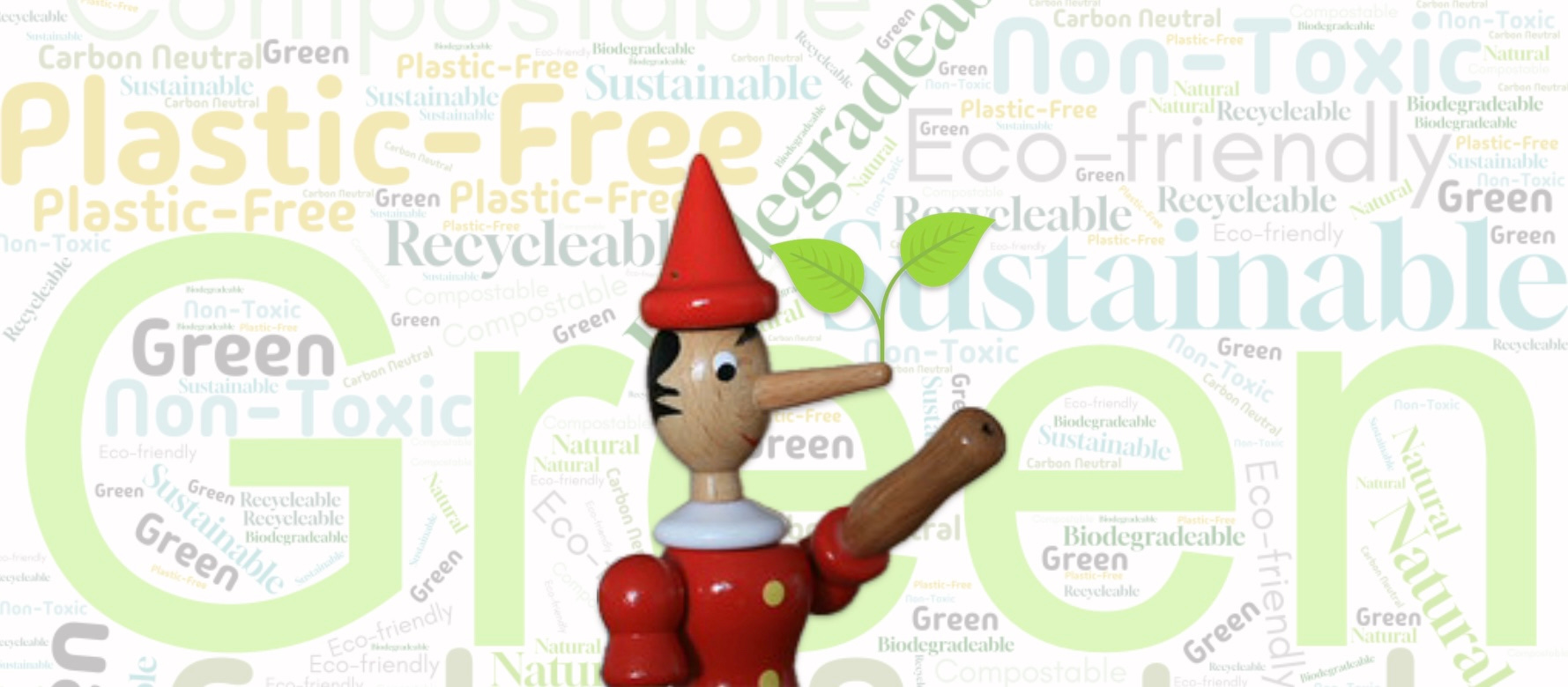
Much like the carbon credit/capture system, everyday people living everyday lives, even in the Global North, are faced with similar violence dressed in green, with words like eco-friendly, natural, biodegradable, sustainable and recyclable ringing in our ears. Greenwashing is an everyday example of a harmful practice meant to mislead without regard for the consequences.
Earlier this month, Nneka Allen wrote:
“If everyone shared the burden of environmental damage equally, more people might act, and more voices would speak with courage and anger, demanding a better world.“
I believe, perhaps naively, that the everyday person, when given the opportunity, cares about the land around them, their health, and the wellbeing of others and I think for this reason, rather than corporations and elites holding themselves to ethical standards of practice, they’d rather mislead the masses to keep money flowing into their pockets.
If more people knew better, more would demand better - much like the student-lead movement that birthed Earth Day in the first place. And because of the collective power we hold, we are all in danger of falling prey to deliberate environmental misdirections and ‘green’ lies, especially when money and power are at play. This is an active injustice.
Greenwashing at Work
There are countless examples of greenwashing in our societies, spanning from egregious lies to more subtle distortions of reality. For example, the idea that plastic can be recycled is a highly misleading, yet extremely effective, marketing campaign meant to keep us consuming plastic products. In actually, the vast majority of plastic products cannot and will never be recycled because the complex process of plastic recycling is not profitable. This means that regardless of its original placement in your blue or otherwise marked recycling bin, a huge proportion of these discarded products are bound for the landfill. On top of that, plastic does not effectively breakdown naturally in the environment, so it can only fragment into smaller pieces and accumulate over time. Enter microplastics - which are now found all throughout the human body, causing health impacts that are only just beginning to be studied and understood.
Consider this, why does recycling in Ontario versus British Columbia look so different?
I believe the answer lives in the underlying motivations of the programs. Having moved from Ontario to British Columbia, I was struck by the noticeable outcome of vastly different approaches to recycling. Where I lived in Ontario, recycling was not a major topic of discussion; I personally believe it’s largely a tool to keep Ontarians mindlessly consuming. You put your items in your bins and it was taken away - simple as that - your work was done. In BC on the other hand, regular recycling related commercials and advertisements are readily accessible in municipalities. The public is educated on what items can and (more importantly) cannot be recycled via at home recycle bins as well as the consequences and real impacts of recycling incorrectly (recycling being diverted to landfill).
In addition to this education, people are encouraged to participate in ‘special recycling’ programs where items that are ineligible for municipal blue bins (in our region that includes a wide range of plastics) can be brought to special sites for proper processing, recycling (when possible) and appropriate disposal. Returning beverage containers to receive your deposit back is also extremely common. All of this education and dedicated effort has resulted in a more environmentally considerate population in my experience. As a result, people ‘consume’ in different ways, people are far more inclined to bring their own containers out with them to reduce their need for disposable products and people also hang onto disposable products while out and about until they’re able to dispose of them properly.
For me, the difference in recycling culture was not very difficult to adopt when I moved to the province; I found the shift to municipal composting to be a more significant change to get used to, but several years later when my mom moved to BC, I got to see her recycling mindset shift in real-time. From confusion, to frustration, to acceptance and now conscious decision-making to reduce the amount of waste (recycling or otherwise) she creates; this is exactly why our understanding of environmental problems matters - they motivate us towards meaningful action. These motivations change our behaviours and can often move us subtly away from consumerist tendencies.
Another example of a greenwashing tactic is the use of misleading language like ‘biodegradable’ to establish a sense of reassurance that a product or item will naturally breakdown in nature, rendering its environmental impact insignificant. In reality, most things can technically be described in this way, the truth in this case lies in a set of assumptions being made about the conditions under which the product/item will degrade. Think for example about at home composting - food scraps if placed in a heap outside, and exposed to the elements (rain etc.) will eventually break back down into soil. Now consider, if the heap were also rotated regularly, exposed to heat from the sun, and a diversity of decomposers (like earth worms) were able to access the heap, the food scraps would decompose that much faster because the surrounding environment became more favourable for the chemical processes (of decomposition) underway. Decomposition is heavily dependent on the surrounding environmental conditions. A common issue with the use of the word ‘biodegradable’ when it comes to products is that it’s often assigned without context and without citing the specific environmental conditions under which optimal, efficient and/or timely biodegradation occurs. Let’s face it, in some cases, it could take hundreds of years for some items to degrade under normal landfill conditions or outside the confines of an experimental laboratory setting… that added context could be the difference between someone making a purchase or not. And I believe these types of contextual omissions are by design.
Regardless of where corporate actions fall on the spectrum, these tactics are harmful and erode public trust in products, marketing, and regulators to name a few. These deceptions can also often rob people of their sense of autonomy over critical aspects of their lives and over the choices they make. These lies not only pull at our societal fabric but also endanger the Earth and our health in the process, and often times without our consent or knowledge.
On a Personal Note
Recently, I learned that aluminum beverage cans are actually lined in plastic. This may be common knowledge for some but for me this came as a shock. I had believed that cans were environmentally safe to use since plastic wasn’t involved and I appreciated the idea that these cans could be easily melted back down and reused in other applications; thus limiting their environmental burden on the planet. But alas, I was unaware of the secret plastic hidden within, and this to me feels like a deliberate omission meant to mislead.
As someone who actively avoids plastics in as many products as possible, I found this revelation to be particularly disturbing. You see, I’ve struggled with autoimmune system challenges for years and have always had a sensitive and easily-reactive physiology. As I’ve managed my health over the years I’ve had to be decidedly cautious. I avoid, synthetic fragrances, toxic cleaning products, and clothing made from non-breathable, synthetic and man-made fabrics. As part of this management, plastics are inevitably avoided as much as possible due to their endocrine disrupting qualities, gut irritating properties when ingested and their inability to be broken down in nature. Environmental misdirections and deceptions such as these are always personal and are a form of violence we can and should no longer accept.
If you’re interested in learning more about plastics, greenwashing, and consumerism check out the following documentaries/docuseries as a starting point:
“The Plastic Detox”
“Greenwashing: The Climate Killer”
“Buy Now: The Shopping Conspiracy”
“Broken”
“Flint’s Deadly Water”
A Final Thought
As a way of connecting with the land, my ancestors, and as an act of environmental stewardship, I garden. By gardening, I reduce by reliance on the grocery store, and thus, reduce the amount of plastic brought into my home through various product wrappings, produce labels, and bags. But I also garden, for the sake of having more autonomy over the foods I consume. As I contemplate, these motivations for my current garden, I can’t help but also consider the inherent danger that would have been present had it been planted decades ago in the yard of my early childhood home. You see, my early years were spent in a historically Black neighbourhood which like so many Black and Indigenous communities in North America, is in close proximity to an environmental hazard - an international border crossing - North America’s busiest.
Heavy, continuous traffic means that air quality is poor and garden crops would be coated in particulate pollution. This is a hazard I would not have been able to see back then, nor were we informed of the notion of any potentially related concerns. Much like communities proximate to major development projects and pollution causing industries, do not benefit from the carbon offsets and far away conservation efforts they maintain, these communities are made vulnerable by environmental injustice being enacted upon them, often times, without their knowledge.
In all my early years, I have no memory of the air quality concerns in the neighbourhood being raised or discussed in relation to the associated health risks and consequences of regular exposure. It was only once we moved, and I began studying earth and natural sciences that these sorts of thoughts and questions even began to cross my mind… and that’s much too late in my opinion. People should have choices and be informed rather than essentially being subjects in an ill-conceived, non-consensual experiment.
As shared in “Environmental Injustice is racism”, Nneka Allen wrote:
“These interlocking systems—environmental injustice, racism, capitalism, and colonialism—predate Flint and will outlast it unless challenged. They have always marked environmental injustice on Turtle Island, devaluing Black, Indigenous, and other marginalized lives. Tackling this requires hope, and more importantly, her daughters: courage and anger.”
With this in mind, let this Earth Day be a reminder not only of the environmental progress being “sustained through daily actions of communities, educators, workers, and families…” but let it also be a call to righteous rage so that we might demand honesty and truth from those with power to effect large-scale change for Earth and all of us. Both aspects, together in my view more accurately reflect the 2026 theme of “Our Power, Our Planet” - and it’s a goal well-worth collectively chasing.
Wondering what to do next?
Here are a couple of suggestions from the April 2026 issue of Alive Magazine.
Conduct a One-Day Audit: Choose a single day to pay attention to water use, energy consumption, waste, and the distance your food travels. Notice where you can make realistic, ongoing changes to reduce your carbon footprint
Go Plastic-Free: Avoid single-use plastics, such as straws and plastic bottles, and use a reusable mug and water bottle.
Practice Quiet Connection: Spend a few minutes outside in silence as often as you van and bring your awareness to the world around you. Protect what you feel connected to.
 | A guest post by
|